BUYER GUIDE
How Fashion Brands Source Knitwear from China
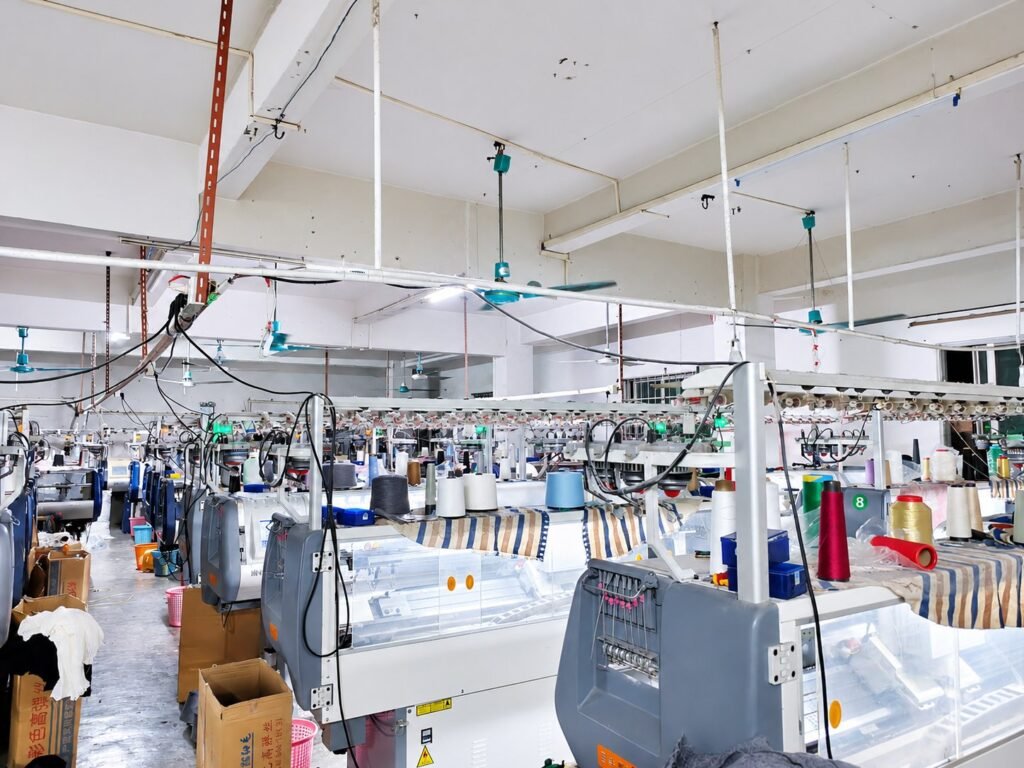
A practical, step-by-step overview of how fashion brands source women’s knitwear from China — from defining your program and vetting partners to sampling, quality control, and planning repeat orders. The same workflow applies whether you are developing a fully custom sweater program or topping up with ready-stock styles.
WHY CHINA
Why Fashion Brands Source Knitwear From China
China remains one of the most complete knitwear ecosystems in the world. For a fashion brand, that translates into three practical advantages:
- Mature knitwear clusters. Yarn suppliers, dye houses, knitting workshops, linking teams, and finishing services operate close to each other, which shortens coordination and reduces handling between steps.
- Wide fibre and weight options. From cotton and acrylic blends to wool and viscose mixes, established workshops work with a broad range of yarns across seasonal weights.
- Flexible engagement models. Depending on the partner, brands can choose fully custom manufacturing, OEM or ODM development, private label programs, or ready-stock styles for fast replenishment.
The advantage is real, but it depends on choosing a partner whose capability matches your product. The rest of this guide walks through the sourcing workflow step by step.
STEP 1
Start With a Clear Knitwear Program
Before contacting any workshop, define what you are actually sourcing. Four decisions shape everything that follows:
- Product scope. Which silhouettes — cardigans, pullovers, oversized or cropped styles? Knitwear workshops specialise; a partner strong in fine-gauge pullovers may not be the best fit for heavy cable knits.
- Gauge. Gauge determines texture, weight, and stitch definition. If you are unsure where your design sits, start with this comparison of 7G vs 12G vs 14G knitwear.
- Yarn direction. Fibre choice drives cost, hand feel, and care requirements. Review the main options in our yarn & materials overview before requesting quotes.
- Service type. Have finished designs? You need custom / OEM manufacturing. Need designs developed for you? ODM. Need your label on existing styles? Private label. Need stock without development time? Ready stock.
A short written program — even one page — makes every later conversation faster and every quote more accurate.
STEP 2
Shortlist and Vet Knitwear Partners
Most brands meet potential partners through B2B platforms, trade fairs, search, or referrals. Whatever the channel, vet against capability rather than price alone:
- Knitwear specialisation. Ask what the workshop actually does in-house versus what runs at partner workshops — knitting, linking, washing, pressing, and packing are different disciplines. A transparent answer is a good sign.
- Willingness to show real production. Photos, video calls, or a visit. A partner comfortable showing live production is easier to trust than one offering only catalogue renders.
- Clear MOQ basis. Minimums should be stated per style, colour, and size. Vague minimums lead to surprises at order time — see our knitwear MOQ guide for how minimums are usually structured.
- Communication quality. A partner that asks about your target customer, price point, and season is engaging with your business; one that only quotes a number is treating you as a transaction.
For a deeper checklist on evaluating suppliers, read how to choose a knitwear manufacturer in China.
STEP 3
Send a Clear Brief and Compare Quotes on the Same Basis
A precise brief gets precise quotes. Include:
- Reference photos or sketches of each style
- A size chart, or a sample garment to copy
- Yarn preference or a target hand feel and price per piece
- Gauge direction (for example 7G, 12G, or 14G)
- Colourways and quantities broken down per colour and size
- Branding requirements: labels, hangtags, packaging
When quotes come back, make sure they are comparable: same yarn spec, same gauge, same quantity split, same trade terms. If one quote looks much cheaper, check what changed — yarn substitution and relaxed sampling assumptions are the two most common reasons.
STEP 4
Approve Samples Before Committing to Bulk
Sampling is where a knitwear program is won or lost. Approve a physical sample — not photos — and check fit, weight, hand feel, stitch quality, and colour against your brief.
Expect at least one revision round; it is a normal part of development, not a red flag. What matters is whether the partner interprets feedback accurately between rounds. The full process is explained in our knitwear sample development guide.
Keep quantities realistic at this stage. For example, on confirmed custom orders our minimums start at 100–300 pcs per style, confirmed case by case — low enough for a focused first run, large enough for a workshop to treat the program seriously.
STEP 5
Manage Bulk Production and Quality Control
Once the sample is approved, bulk follows the approved reference. During production, quality control should cover what actually matters in knitwear:
- Stitch tension consistency across panels
- Measurements against the approved size chart
- Colour consistency between pieces and dye lots
- Linking quality at seams, necklines, and cuffs
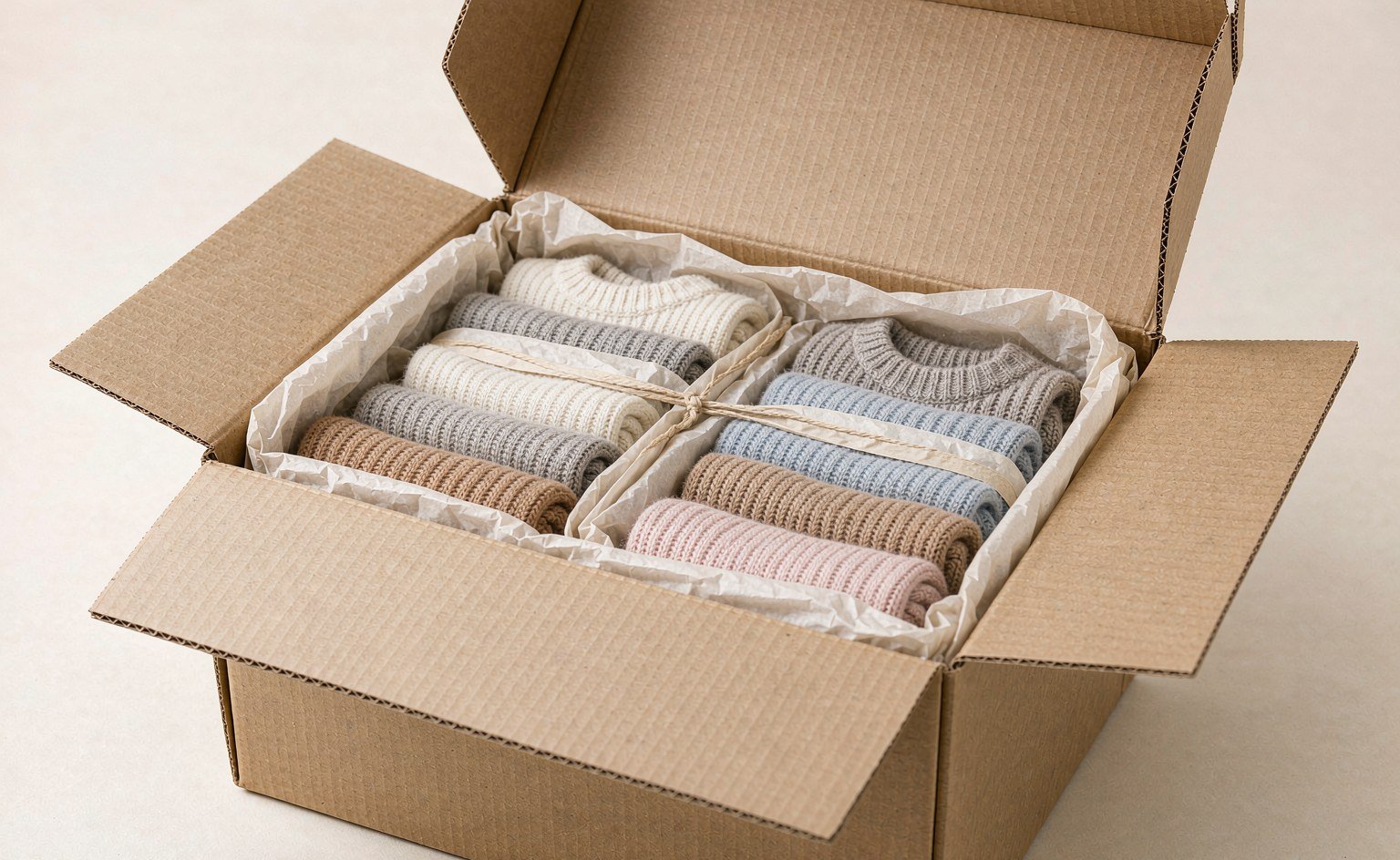
- Washing, pressing, and final appearance before packing
Ask who performs each stage. In our own workflow, sample follow-up, order management, finishing, pressing, quality control, and packing are handled by our team, while knitting and linking run at our long-term partner workshops — an arrangement we state plainly because it affects how questions are answered during production. For what to inspect before shipment, see our knitwear quality control checklist.
STEP 6
Plan Reorders and Repeat Production
The first order proves the partnership; the reorder is where sourcing pays off. Once a style sells, repeating it is faster and lower-risk than developing something new — the patterns, yarn specs, and QC references already exist.
Two practical habits help: keep records of every approved sample and yarn spec, and plan replenishment ahead of your selling season. If a style needs to ship quickly between development cycles, ready-stock knitwear can bridge the gap while custom repeats are produced.
AVOID
Common Mistakes When Sourcing Knitwear From China
- Choosing on unit price alone. The cheapest quote usually reflects a cheaper yarn, a looser sampling process, or both.
- Skipping the physical sample. Photos hide tension problems, weight issues, and colour drift.
- Ordering too many colours at once. Every colour adds minimums and management overhead. Two or three colourways is a workable first run.
- Comparing quotes on different terms. Always normalise yarn spec, gauge, quantity split, and trade terms before comparing prices.
- Not asking who does the work. Clarify which stages are in-house and which involve partner workshops — transparency here predicts transparency everywhere else.
KEY TAKEAWAY
Source in a Way That Fits Your Brand’s Actual Needs
Successful knitwear sourcing is less about finding the biggest factory and more about matching capability to your program: the right gauge and yarn direction, a partner who communicates clearly, samples approved before bulk, and a QC process aimed at what matters in knitted garments. Brands that keep this sequence — define, vet, brief, sample, produce, reorder — build supply relationships that last across seasons.
FAQ
Frequently Asked Questions
What minimum order quantity should a fashion brand expect for custom knitwear?
Minimums vary by workshop and yarn. They are usually set per style, colour, and size. Our own minimums start at 100–300 pcs per style, confirmed case by case on confirmed custom orders; a fuller explanation of how minimums are structured is in our MOQ guide.
Should a brand work OEM or ODM?
OEM suits brands that arrive with finished designs and a clear tech pack. ODM suits brands that want the workshop to develop styles based on direction and references. A comparison of both, plus private label, is in OEM vs ODM vs Private Label.
How many sample rounds are normal?
One to three rounds is typical, depending on how complete the brief is and how many revisions the fit needs. What matters more than the count is whether each round converges toward your approved reference.
GET STARTED
Ready to Start Your Knitwear Project?
Share your styles, target quantities, and timeline — we will come back with a practical direction, a quote basis, and a sampling plan.
Related categories: Turtleneck Sweaters · Sweater Vests · Knit Sets